purpose
Body Watani Dance project is a space to research movement, investigate artistic practice, and create performances from an embodied relation with ‘watan’ or homeland inside our bodies. Our work is held by two Palestinian sisters, Leila and Noelle Awadallah; daughters of a Palestinian refugee lineage, born on stolen land on Turtle Island. We center Palestine in our lives and artistry. It is our compass, and point of entry into relations with peoples and lands. The knowledge we cultivate flows from ancestral digs, present realities, and future visions of looking toward liberation; which calls our dancing bodies across terrains of grief, rage, sumud, and love for Palestinian Aliveness.
Body Watani* names a body-as-homeland research practice we develop and share with communities. It investigates how we find dance that is rooted in Arab and SWANA* movement languages within experimental, somatic, and contemporary contexts. Our work is not only about sharing stories and celebrating culture, rather we engage directly in politics of the region, the specificity of injustice and the implications on our bodies and lands with all who we encounter. At the same time, it is a space to gather to investigate ones’ unique body-watani through ones’ own research and questions. As we meet within this space from very different trajectories of life and pathways across the earth. We ask how to do that kind of personal work while simultaneously in collective community.
Dancing activates our cells, bones, blood and matter. Our ideas at Body Watani are not new, but engage teachings of Black, Indigenous, brown scholars, activists, artists and teachers whom we carry and contemplate. We see the ways ancestral work heals deep wounds and calls us to confront the complexity of where we come from, and where we are now, as important for all people. Body Watani is a defined, yet unknown vessel where we develop and share how we use dance as a pathway to physicalize decolonizing our bodies from the inside out. We see the core of decolonial work as an endless dive into the material body, and as tangible resistance — not an abstract academic thought.
*Watani indicates my homeland in Arabic. In this project, we engage this word as it often occurs in the context of Palestinian poetry – invoking the land before borders and colonization that is deeply known in the body.
*SWANA: South West Asia North Africa; a phrase that reorients a broad region of shared & different cultural connections to gather in an identity more accurate than the ‘Middle East’ or ‘The Arab World’.
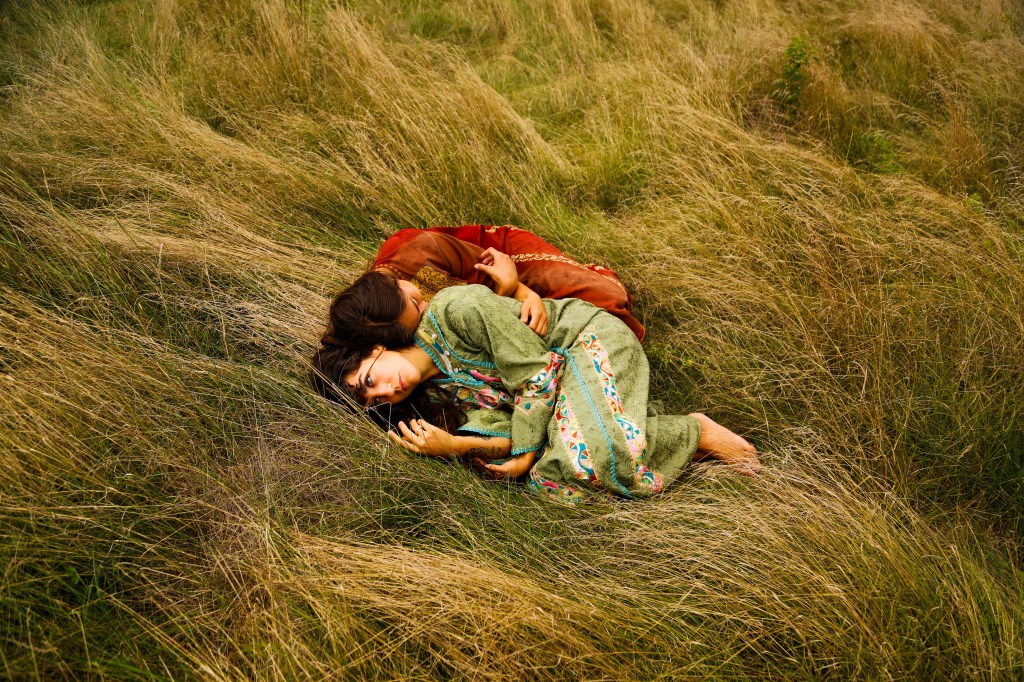
Image above + images on homepage by Erika Ticknor
 body watani